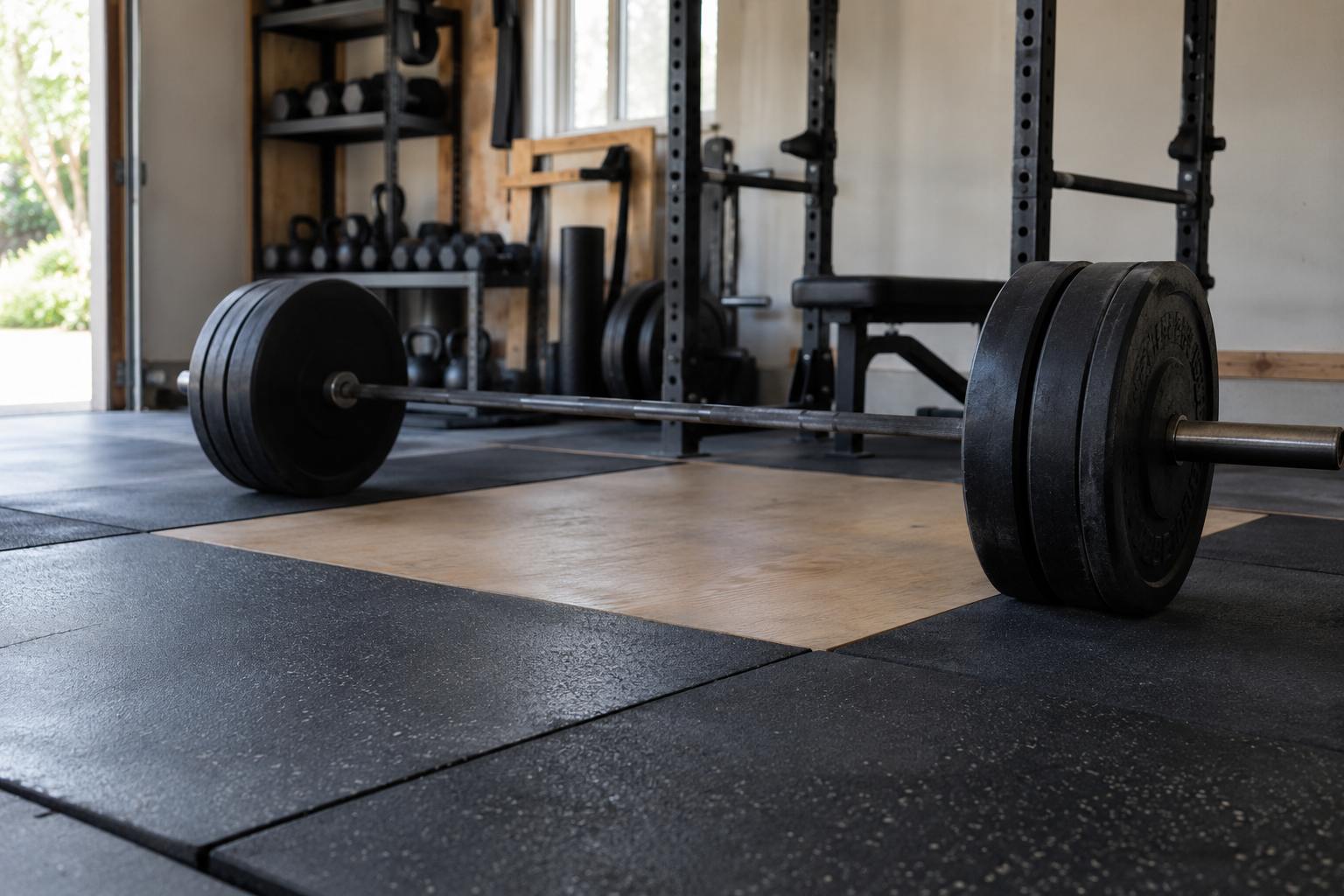
A heavy barbell can ruin an unprotected floor surprisingly quickly. Iron plates can chip concrete, a loaded squat rack can leave dents in soft flooring, and dropping weights upstairs can send vibrations through the house.
For most garage gyms, 3/4-inch rubber mats are the best starting point. They provide a firm surface for squats, bench presses and controlled deadlifts. If you regularly drop heavy barbells, adding a dedicated lifting platform is a better solution than simply buying thicker mats.
The floor beneath the rubber is important too. Concrete, timber and upstairs floors handle heavy equipment and repeated impacts in different ways.
Which Flooring Should You Choose for Your Home Gym?
Before ordering anything, consider the heaviest barbell you expect to use and how it will reach the floor. Lowering 225 pounds under control is not the same as dropping 400 pounds after a deadlift.
| Flooring | Best For | Main Limitation |
| 3/4-inch rubber mats | Garage gyms, squat racks and controlled deadlifts | Heavy and difficult to move |
| 1/2-inch rubber tiles | General barbell training and equipment areas | Less impact protection than thicker rubber |
| 8 mm rolled rubber | Benches, machines and lighter weights | Not designed for repeated heavy drops |
| Plywood and rubber platform | Heavy deadlifts and Olympic lifts | Requires space and assembly |
| Foam puzzle mats | Stretching and floor exercises | Too soft for heavy equipment |
A squat rack and bench do not require the same impact protection as a deadlift area. You can save money by using ordinary rubber flooring around the rack and building a stronger surface where the plates land.
Rubber Stall Mats Are the Best Starting Point for a Garage Gym
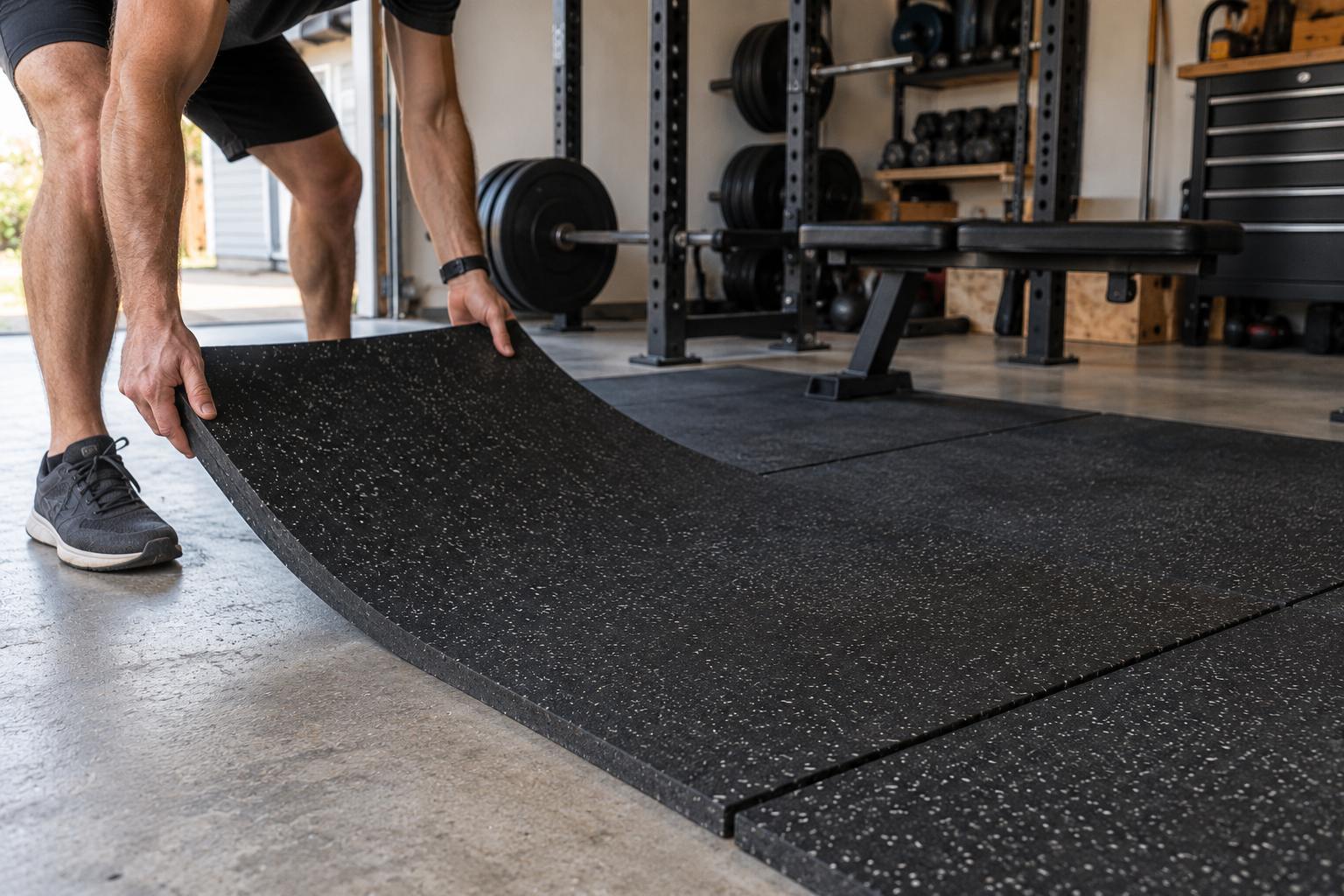
Rubber stall mats were originally made for agricultural use, but many lifters use them because they are thick, dense and relatively inexpensive.
A common mat measures 4 by 6 feet and is 3/4 inch thick. One covers 24 square feet, enough for a small section beneath a rack or beside a lifting platform.
The material stays firm under heavy equipment and protects concrete from scratches, ordinary plate contact and damage caused by moving benches.
Before buying, check the actual thickness. Some mats are thinner than advertised, and agricultural products are not always intended for indoor use.
New rubber can have a noticeable smell. If your gym is inside the house, choose flooring rated for indoor use and check the manufacturer’s information on emissions and ventilation.
Rubber also needs a sound surface underneath. A mat will not repair cracked concrete or make an uneven floor level.
Build a Lifting Platform if You Regularly Drop Heavy Barbells
Deadlifts put repeated pressure on two areas of the floor, directly beneath the plates. A controlled descent creates less impact than dropping the loaded bar from knee height.
For heavy training, a platform built from plywood and rubber spreads the load and provides a dedicated landing area.
A common platform measures 4 by 8 feet. The middle section provides a firm place to stand, while rubber sections protect the areas where the plates touch down.
Several layers of plywood can be secured together to create a stable base. The exact construction should suit the weight, impact and floor underneath.
Even the choice between sumo and conventional deadlifts affects how you position your feet and the available space around the bar. A wider sumo stance needs enough room on the central lifting surface.
Keep in mind that a homemade platform does not guarantee protection against repeated drops from overhead. Dedicated impact pads or professionally rated flooring may be necessary.
How Thick Should Home Gym Flooring Be?
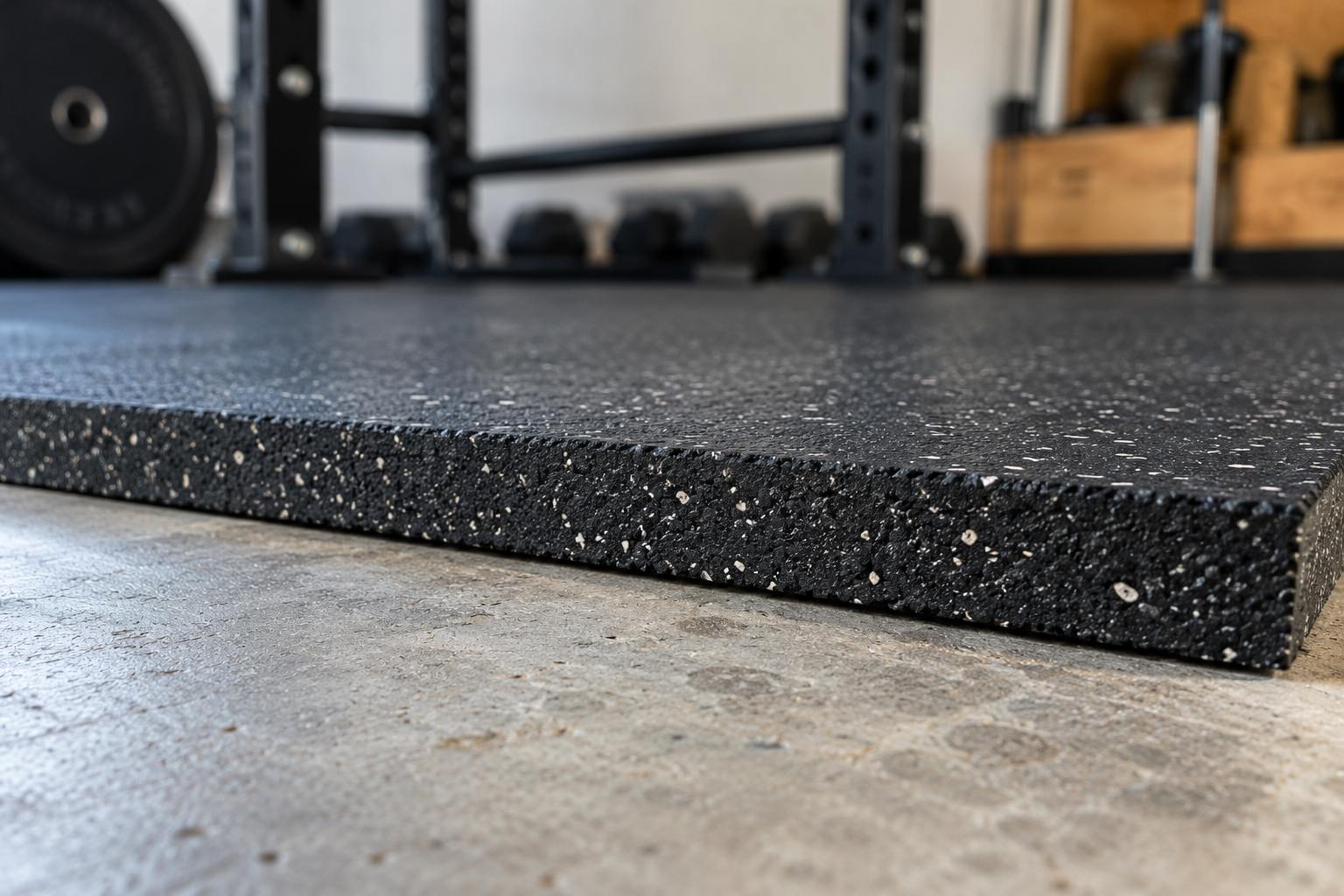
Thickness is useful when comparing rubber flooring, but it does not tell the entire story. Dense rubber responds differently to heavy loads than a soft mat of the same thickness.
| Thickness | Suitable Use |
| 1/4 inch | Light equipment and basic surface protection |
| 3/8 inch | Benches and general gym equipment |
| 1/2 inch | Barbell training with controlled movements |
| 3/4 inch | Squat racks and garage lifting areas |
| Specialist impact tiles | Designated areas for dropped weights |
For squats and bench presses, 1/2-inch rubber can be sufficient when the equipment sits on a stable, suitable floor. I would choose 3/4-inch mats for a garage used regularly for heavy barbell training.
For deadlifts involving repeated hard contact, use a platform or impact system rather than relying on rubber thickness alone.
Why Foam Puzzle Mats Are a Poor Choice for Heavy Weights
Foam puzzle mats are inexpensive, comfortable and easy to install. Unfortunately, they compress under concentrated weight.
The feet of a heavy squat rack can sink into foam, leaving permanent dents. Soft flooring may also shift as you move under a loaded bar.
Squats and deadlifts require firm footing. A surface that compresses unevenly makes it harder to maintain a stable position.
The same applies to footwear. A solid sole supports consistent foot contact, and the choice of powerlifting shoes for squats and deadlifts affects stability and lifting position.
Keep foam mats for stretching, mobility work and bodyweight exercises. Put heavy equipment on dense rubber or another suitable rigid surface.
Can You Install Rubber Flooring Directly Over Concrete?
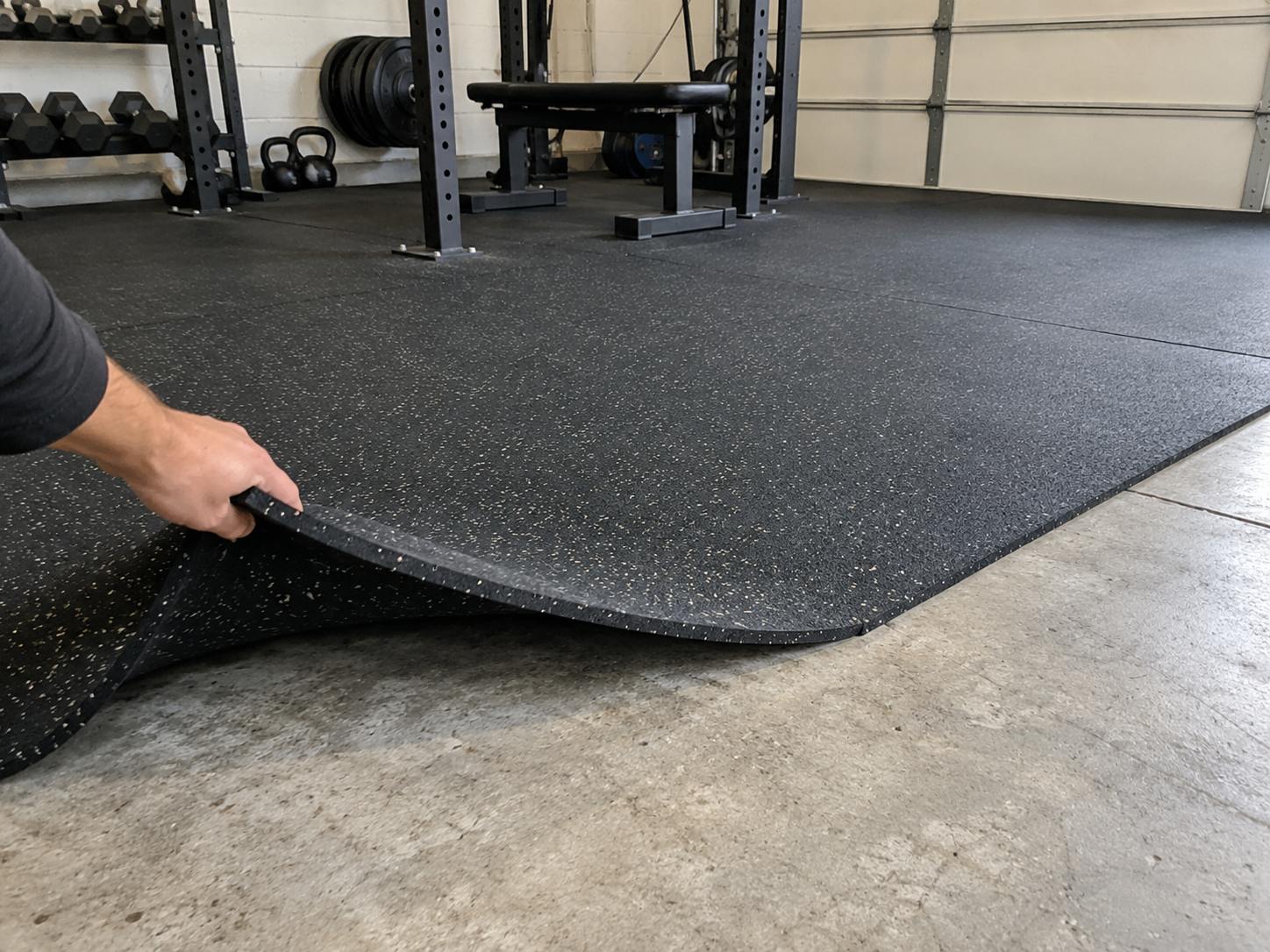
A sound, level concrete slab is a suitable foundation for many garage gyms. Rubber mats help protect it from scratches and ordinary contact with equipment.
However, concrete can still crack under concentrated impacts. A rubber mat is not a guarantee against damage from repeatedly dropping heavy weights.
Before installation, check for existing cracks, uneven sections and moisture. If the slab is damaged or sinking, address the underlying problem first.
Make sure water cannot collect beneath the mats. In damp garages, trapped moisture can cause unpleasant smells and affect floor finishes.
For a dedicated deadlift area, position the platform on a stable section of the slab, with enough clearance to load and unload plates.
What if Your Home Gym Has a Wooden Floor?
A spare bedroom may have enough room for a rack, but its floor structure deserves careful assessment before you start lifting heavy.
Wooden floors are supported by joists. A rack, stored plates, a loaded barbell and the lifter all add weight to the same area.
Rubber flooring protects against surface damage, but it does not increase the load capacity of the joists.
Repeated impacts also send vibrations through the structure. Neighbours or family members may hear and feel every deadlift, even with thick mats.
Before installing heavy lifting equipment upstairs, have a qualified structural professional assess the floor and proposed loads. A ground-level concrete slab is generally easier to prepare for serious barbell training.
How Much Space Should You Cover With Rubber Flooring?
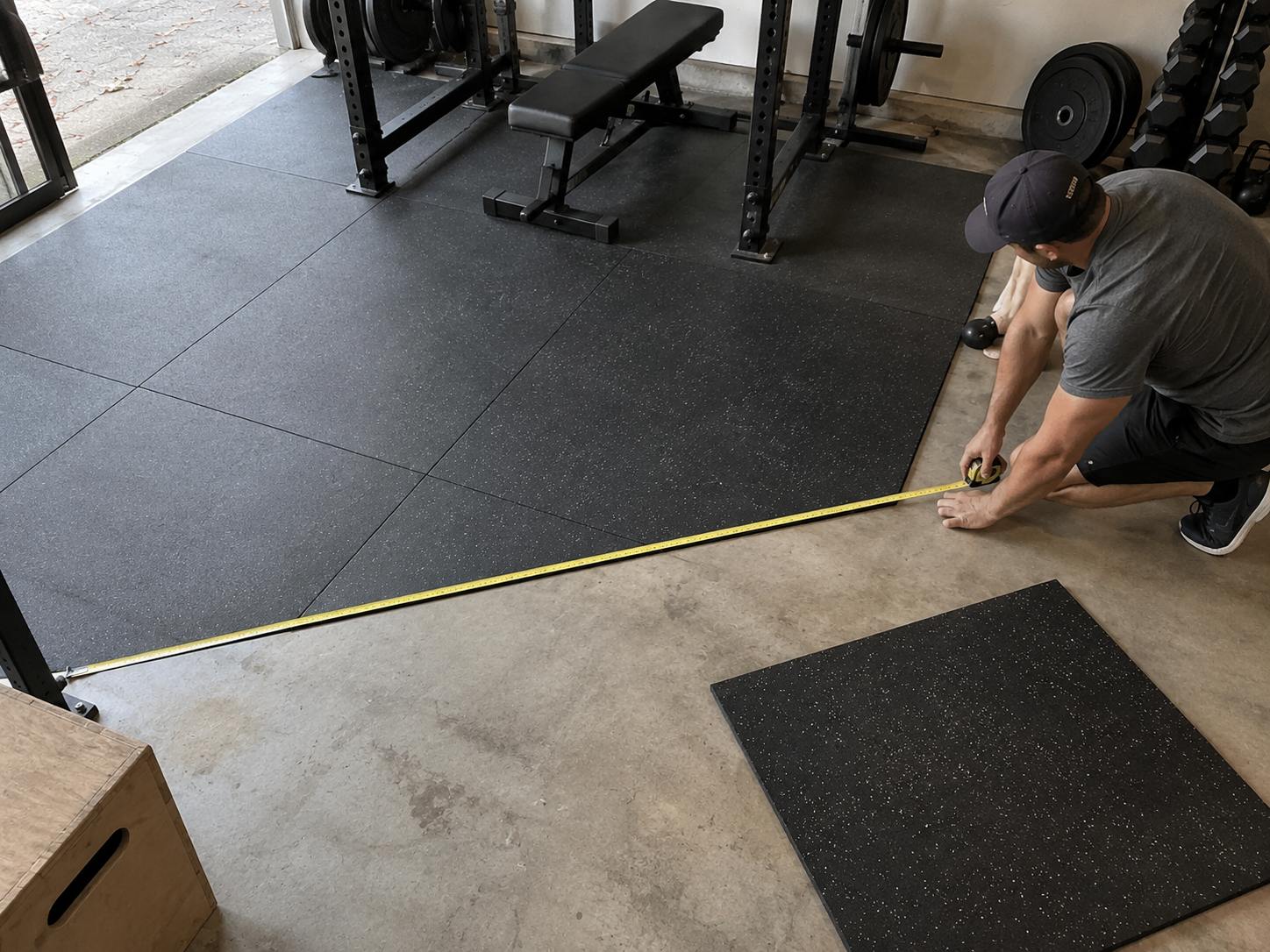
You do not need to cover every inch of a garage. Start with the space occupied by the rack, bench and loaded barbell.
For example, a 10 by 12 foot training area covers 120 square feet. Five rubber mats measuring 4 by 6 feet provide the same total area, although cutting and layout can affect the number required.
A separate 4 by 8 foot platform occupies 32 square feet. It may fit within that training area, depending on rack placement and clearance around the bar.
Leave enough space to add weight plates without hitting a wall. Allow room to walk around the equipment and remove plates safely.
If you follow a three-day strength training schedule that includes squats, deadlifts and other barbell exercises, plan the layout around the movements rather than fitting equipment wherever an empty corner remains.
Do You Want to Build a Home Gym Outdoors?
Outdoor training introduces rain, temperature changes and moisture. Equipment and flooring must be suitable for those conditions.
A level concrete patio can support an outdoor lifting area if the slab is structurally suitable and protected with appropriate rubber flooring.
If the gym forms part of a larger garden area, weather-resistant decking can provide a separate walking or seating surface, but ordinary deck boards should not be used as the landing area for heavy barbells.
A raised deck also needs a structural assessment before supporting a loaded rack and stored weight plates. Repeated impacts create demands that ordinary outdoor furniture does not.
Keep steel bars and plates dry after training, and avoid leaving electrical equipment exposed to rain.
How to Keep Home Gym Flooring Clean
View this post on Instagram
Rubber flooring collects chalk, sweat and dirt from shoes. Regular cleaning keeps the surface comfortable to use and helps prevent debris from building up between mats.
Sweep or vacuum first, then use a cleaner approved by the flooring manufacturer. Avoid harsh solvents that could damage the rubber or leave a slippery residue.
Check the edges periodically. Mats can move slightly during training, creating gaps or raised sections.
In garages and basements, lift removable mats occasionally to check for moisture underneath. Replace flooring that becomes torn, unstable or badly compressed.
What Flooring Would I Choose for a Home Powerlifting Gym?
For a garage with sound concrete, I would start with dense 3/4-inch rubber mats beneath the squat rack and bench.
If heavy deadlifts are part of the training plan, I would add a dedicated plywood and rubber platform where the plates land. Repeated overhead drops call for additional impact protection designed for that use.
For lighter strength training in a spare room, thinner rubber may be sufficient, provided the floor structure can safely support the equipment.
There is no reason to pay for heavy impact flooring across an entire garage if only one section receives dropped weights. Spend the money where the barbell lands, keep the surface firm beneath your feet and make sure the floor underneath can handle the load.